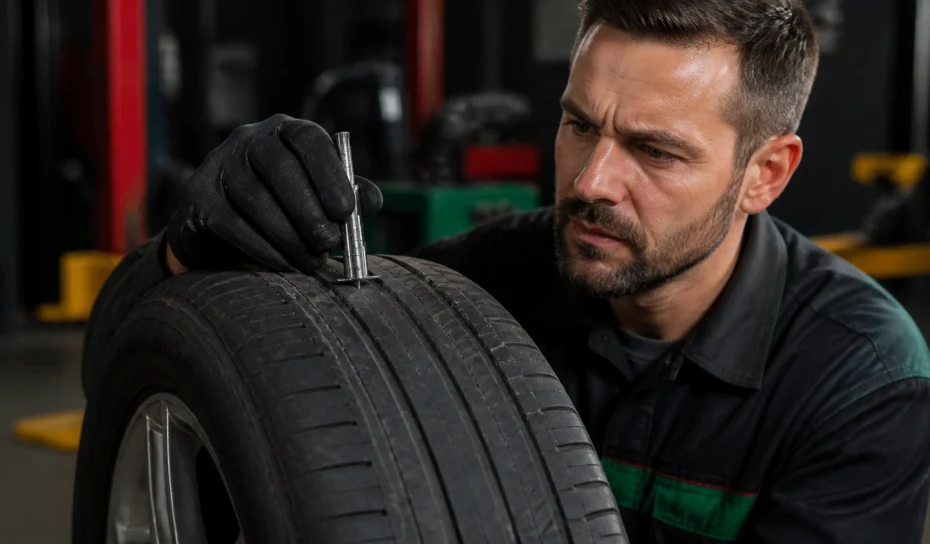
A damaged or worn tyre can become a serious safety hazard without warning. If you are driving through Kingsbury, Queensbury, Wembley or surrounding North London areas, poor tread, hidden sidewall damage or an unsafe previous repair could leave you stranded at the roadside or facing reduced grip on a wet, dark motorway.
Buying part-worn tyres can help you control your motoring costs, but the cheapest tyre is not always the safest choice. You need to know what you are looking at and how the tyre has been checked.
For professionally inspected options, visit Top German Tyres nearby in Colindale. Our Used tyres in Kingsbury service supply quality part-worn tyres from recognised brands, with professional fitting and safety checks before installation.
WHY PART-WORN TYRES NEED CAREFUL CHECKING
Used tyres may have plenty of life remaining. They can be a practical solution if you need to replace one damaged tyre, match a particular size or keep your vehicle moving while managing your budget.
However, a part-worn tyre has already experienced use. You may not know whether it has been driven under-inflated, struck a kerb, exposed to harsh storage conditions or repaired after a puncture.
That is why you should never judge a used tyre by appearance alone. A tyre may look acceptable from the outside while containing internal damage or showing signs of uneven wear.
A reputable used tyre shop in Kingsbury should be able to explain the tyre’s condition, show you the tread and sidewall, and confirm that it has passed a proper inspection before fitting.
KNOW THE LEGAL TREAD DEPTH REQUIREMENTS
For cars, vans and light vehicles in the UK, the legal minimum tread depth is 1.6mm. This must be present across the central three-quarters of the tread and around the complete circumference of the tyre.
Part-worn tyres offered for sale have additional requirements. The original tread grooves should be clearly visible and measure at least 2mm across the full breadth of the tread and around the entire outer circumference.
A tyre that is close to the legal limit gives you less margin for wear and changing weather. At Top German Tyres, our used tyre inspection process includes measurement with a tread-depth gauge. The Kingsbury service page states that the business aims to stock tyres with 4mm or more of tread, providing more usable life than a tyre close to 1.6mm.
The legal minimum is not a recommended target. If you regularly drive in heavy rain, carry passengers, use a vehicle for work or complete frequent motorway journeys, additional tread can offer greater reassurance.

1. CHECK THE TREAD DEPTH ACROSS THE WHOLE TYRE
Do not measure only the deepest-looking groove. Tread depth should be checked at several points:
- Across the inside edge.
- Through the centre of the tread.
- Across the outside edge.
- At different points around the tyre’s circumference.
Uneven readings can indicate alignment problems, worn suspension components or incorrect tyre pressures. If the inner shoulder is much more worn than the centre, for example, the tyre may have been running with incorrect wheel geometry.
Look for tread-wear indicators inside the main grooves, but do not rely on them alone. A professional gauge gives a more accurate measurement and helps identify uneven wear before the tyre is fitted.
If you have already purchased used tyres and notice rapid wear on one edge, arrange a wheel alignment in Kingsbury. Incorrect camber, caster or toe settings can damage a replacement tyre quickly.
2. READ THE DOT OR DATE CODE
The DOT or date code helps you understand when a tyre was manufactured. The final four digits generally show the production week and year.
For example, a code ending in 2324 indicates production during week 23 of 2024.
Cars and light vans do not currently have a general UK legal maximum tyre age, but age still matters. Rubber hardens over time, particularly if the tyre has been stored outdoors, exposed to sunlight or kept in poor conditions.
When checking age, look for:
- Cracking between tread blocks.
- Fine cracks along the sidewall.
- A hard or brittle rubber feel.
- Distortion or flattening from storage.
- An unclear or missing date code.
Ask the technician to assess the tyre’s overall condition rather than relying on age alone. A newer tyre with impact damage is not automatically safer than an older tyre that has been correctly stored and thoroughly inspected.
3. INSPECT THE SIDEWALL FOR DAMAGE
Sidewall damage is one of the most important issues to identify before purchase. The sidewall flexes as you drive, so damage in this area can compromise the tyre’s structure.
Reject a tyre if you see:
- Bulges or bubbles.
- Deep cuts or tears.
- Exposed cords or ply.
- Severe cracking.
- Abrasion from a kerb or pothole.
- A flat spot or unusual deformation.
A bulge often indicates internal structural damage caused by an impact. It is not something that can be safely corrected through inflation or cosmetic treatment. Do not drive on a tyre with a bulge.
A proper inspection should cover both sidewalls, including the side facing the vehicle. Damage can be missed when only the outward-facing side is checked.

4. ASK ABOUT PREVIOUS REPAIRS AND PUNCTURES
A used tyre may have been repaired after a puncture. That does not automatically make it unsafe, but the repair must have been carried out correctly and the tyre must still be structurally sound.
Ask:
- Where was the original penetration?
- Was the repair completed internally?
- Has the tyre suffered more than one puncture?
- Is there any damage near the shoulder or sidewall?
- Has the tyre been driven while flat or significantly under-inflated?
A repair in the central tread area may be suitable for assessment, while damage close to the shoulder or sidewall is often not safely repairable. External-only plugs, string repairs or improvised fixes should be treated with caution.
Top German Tyres also assesses repairable punctures and can advise whether a tyre should be repaired or replaced. If a safe repair is not possible, a properly inspected replacement is the better option.
5. LOOK FOR UNEVEN WEAR AND MATCHING SPECIFICATIONS
Tyres on the same axle should normally be matched as closely as possible for size, construction, load index and speed rating. Mixing unsuitable specifications can affect handling, braking and stability.
Check the sidewall markings for:
- Tyre size.
- Load index.
- Speed rating.
- Radial construction.
- Any reinforced or run-flat specification required by your vehicle.
Uneven wear may reveal problems beyond the tyre itself. It can be linked to wheel alignment, worn steering components, incorrect inflation or a wheel-balancing issue.
When tyres are fitted, ask whether the wheel has been balanced. Correct balancing helps reduce vibration through the steering wheel and supports even tyre wear.
HOW TOP GERMAN TYRES CHECKS USED TYRES
Top German Tyres is located at Unit B, 11A Carlisle Road, Colindale, NW9 0HD, nearby for drivers travelling from Kingsbury and surrounding North London areas.
Before a used tyre is fitted, the inspection process includes:
- Visual and physical inspection for cuts, bulges, exposed cords and structural concerns.
- Tread-depth measurement at multiple points across the tyre.
- Sidewall inspection for impact damage, cracking and deformation.
- Pressure testing to identify leaks or air-retention problems.
- Repair assessment where previous punctures or repairs are visible.
- Professional fitting and correct torque using appropriate workshop equipment.
- Wheel balancing where required.
- Final safety check before your vehicle leaves.

This process helps separate a genuinely useful part-worn tyre from one that should not be returned to the road.
Our stock includes quality used branded tyres from manufacturers such as Michelin, Pirelli, Bridgestone, Goodyear, Continental, Dunlop, Hankook, Yokohama and Toyo, subject to availability and the correct specification for your vehicle.
USED TYRES OR NEW TYRES: WHICH IS RIGHT FOR YOU?
Used tyres may be suitable when you need a cost-conscious replacement and the tyre has been properly inspected. They can also help when you need a particular size immediately.
New tyres may be the better long-term choice if:
- You cover high annual mileage.
- You drive frequently on motorways.
- Your vehicle carries heavy loads.
- You need a matched set with maximum available tread.
- Your existing tyres are all close to replacement.
- You require a specific premium or manufacturer-approved specification.
The correct option depends on your vehicle, driving style and budget. A professional technician should explain the available choices without pressuring you into a purchase.
MORE THAN TYRES: COMPLETE VEHICLE SUPPORT
Tyres are only one part of your vehicle’s safety system. Before a long journey, you should also evaluate your brake pads, discs, steering and suspension.
Top German Tyres provides the following:
- Brake, clutch and exhaust repairs.
- MOT classes 4, 5 and 7.
- Car servicing for routine maintenance and fault checks.
- Tyre fitting from £39, subject to the tyre and service required.
- A Price Beat Guarantee to help you access competitive pricing.
- Opening 7 days a week.
- Mobile tyre fitting for suitable locations.
- A convenient local pick-up service.
If your car is due for maintenance, arrange car Ac service Colindale alongside your tyre inspection. You can also read our guide to stop-start traffic and the warning signs affecting brakes, clutch and exhaust components.
For comfort and visibility during changing weather, our car AC repair service in Kingsbury can help with air-conditioning faults and regas requirements.
You can also compare nearby support through our guides to used tyres in Edgware and used tyres in Colindale.




Post a Comment